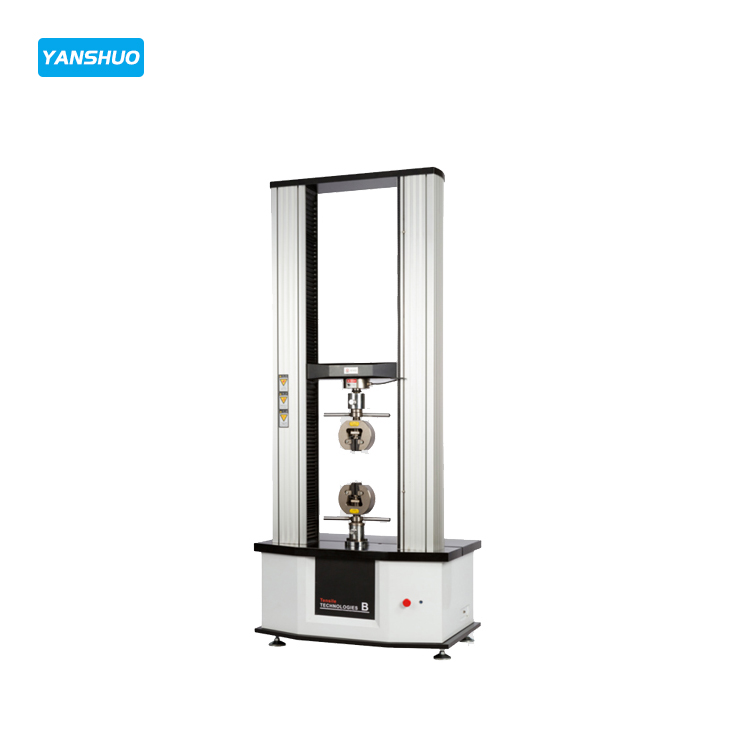
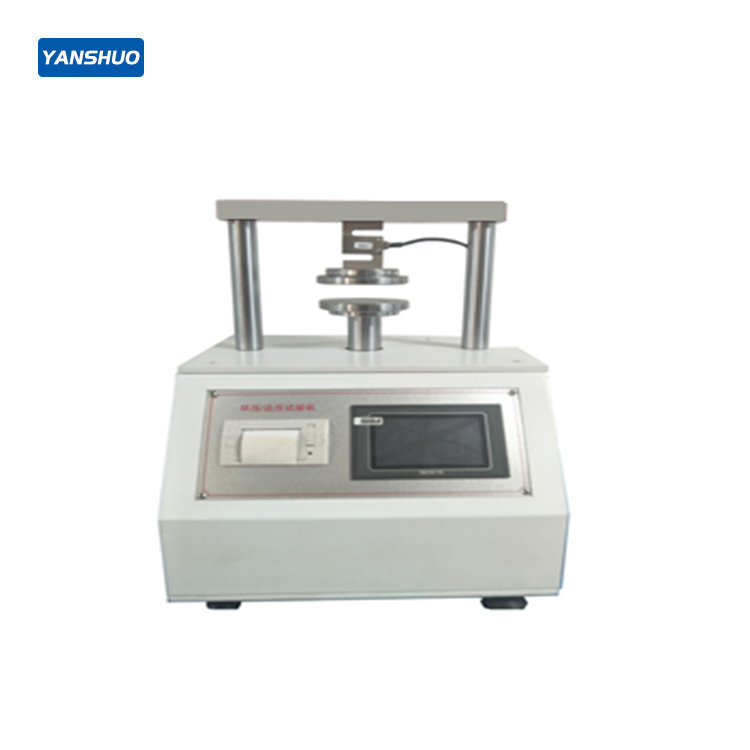
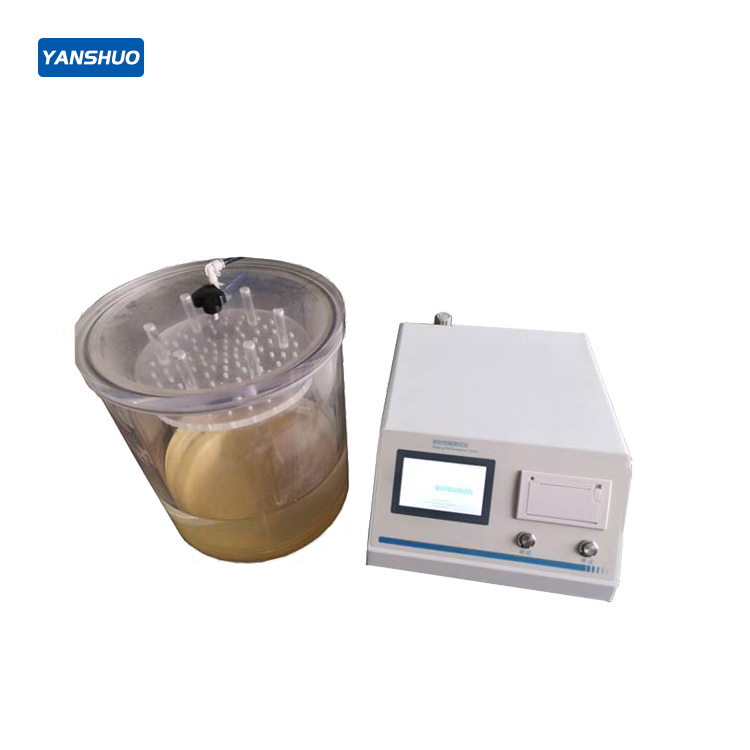
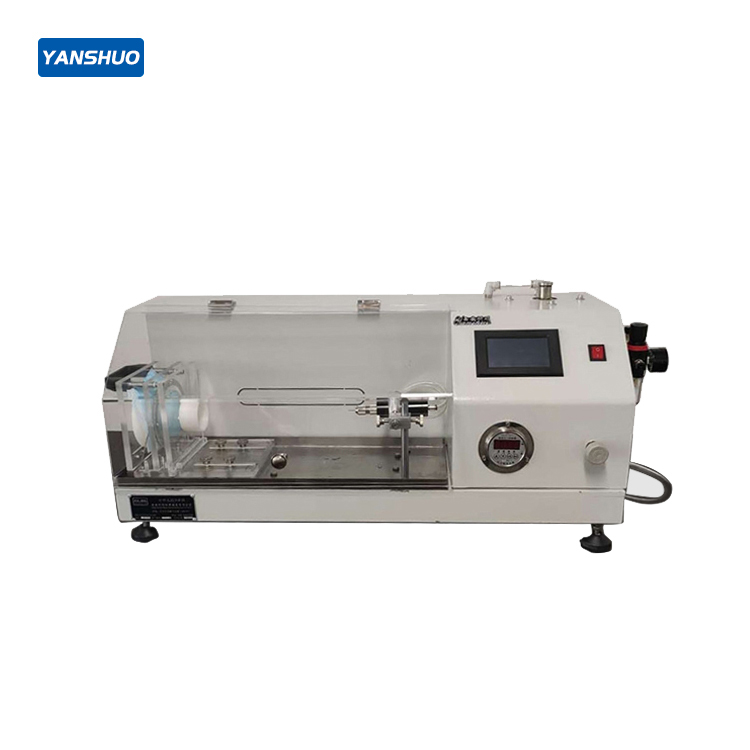
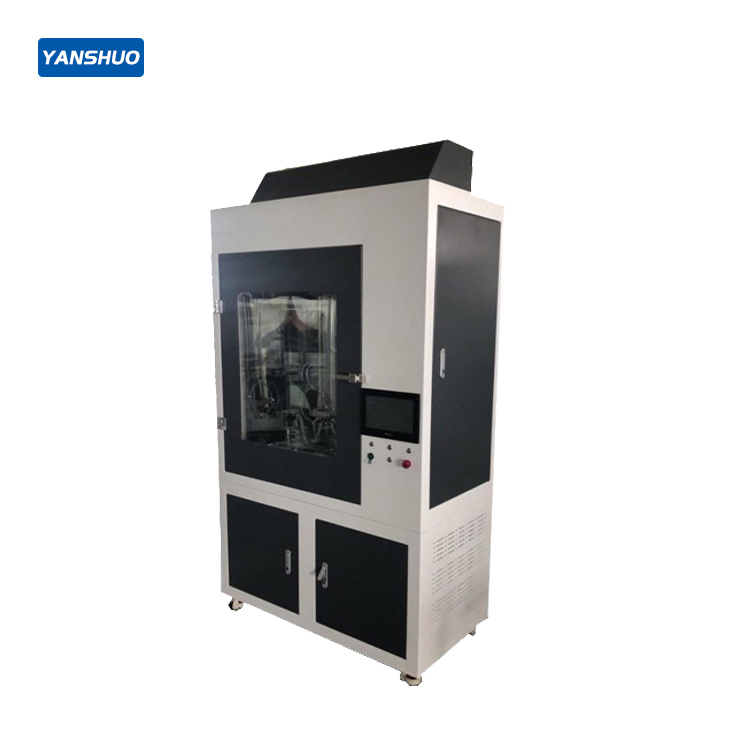
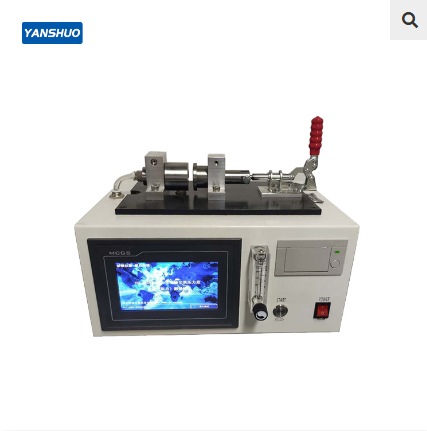
The machine is widely used in the mechanical properties test of metal, rubber, plastic, metal bar, metal pipe, metal plate and metal profiles and composite materials, and is also suitable for tensile, compression, peeling, shearing, tearing, bending (folding), metal welding strength, and riveting strength test of various finished products. It can print a number of data, and can make graphical output comparison according to different data, with high control accuracy and easy operation. Modular design, a wide range of accessories, flexible matching. This machine is mainly suitable for the testing of mechanical properties such as tensile, compression, and bending of various materials, and can also realize multiple closed-cycle tests such as constant stress, constant strain, creep, relaxation, axial and radial. According to GB, JIS, ASTM, DIN and other standards, tensile strength, yield strength, elongation, constant elongation stress (any percentage), constant stress elongation (any percentage), elastic modulus, elongation at break, peel strength (including 90 and 180 degree peeling), flexural elastic modulus, tear strength, adhesion strength, shear strength and other parameters can be automatically calculated.
【Relevant Standards】
GB, JIS, ASTM, DIN and other standards
【Scope of application】:
The machine is widely used in the mechanical properties test of metal, rubber, plastic, metal bar, metal pipe, metal plate and metal profiles and composite materials, and is also suitable for tensile, compression, peeling, shearing, tearing, bending (folding), metal welding strength, and riveting strength test of various finished products. It can print a number of data, and can make graphical output comparison according to different data, with high control accuracy and easy operation. Modular design, a wide range of accessories, flexible matching.
This machine is mainly suitable for the testing of mechanical properties such as tensile, compression, and bending of various materials, and can also realize multiple closed-cycle tests such as constant stress, constant strain, creep, relaxation, axial and radial. According to GB, JIS, ASTM, DIN and other standards, tensile strength, yield strength, elongation, constant elongation stress (any percentage), constant stress elongation (any percentage), elastic modulus, elongation at break, peel strength (including 90 and 180 degree peeling), flexural elastic modulus, tear strength, adhesion strength, shear strength and other parameters can be automatically calculated.
[Meet the standard]:
GB, JIS, ASTM, DIN and other standards
【Product Features】:
1 . It adopts high-precision displacement, speed, and load full closed-loop control software
2. Transmission: It adopts high-precision ball screw transmission, high efficiency, high rigidity, small deformation and low noise.
3. Drive: Driven by Japanese Panasonic servo motor, it provides stable, wide adjustable speed drive, high speed, low vibration, and high-speed positioning.
4. Crossbar material: made of 45# mold steel by grinding and processing, with a parallel error ≤ 0.5mm and high rigidity;
5. Guidance: Four-column guide with chrome steel rods originating from South Korea, with excellent wear resistance and coaxiality;
6. Displacement measurement: use Japanese LINE high-pulse (2500r/p) photoelectric encoder to measure displacement, up to: 0.001mm;
7. Force value measurement: using American TRANSCELL precision tension compression explosion-proof load element, accuracy: 0.03% F.S
8. Control board: using self-developed 32-bit ARM chip for measurement and control, better than the line 16-bit DSP processing technology, high resolution: 1/500000
9. The software is powerful: it can meet the test of different materials, and can perform different standards at the same time, including foreign standards (there are data processing functions of a variety of standards), and the units: N, kN, g, kgf, Ib, cN can be converted to each other. The test software designed entirely according to the test standards is powerful. The test curve can be enlarged, and it can clearly see the amount of data collection, the speed and the smoothness of the curve, and it can also reflect the overall processing power of hardware and software.
10. Test report and curve: the curve is accurate, the test report can be edited, and the test curve is highly fine, indicating that the test sampling frequency is fast, which is more obvious than that of peers.
[Technical specifications]:
| model |
YS-9000 series 20KN |
| YS-9000B |
YS-9000A |
| Capacity selection |
5、10、20、30、50、100、200、300、500N、1、2、3、5、10、20 、30 kN
One range as standard Three ranges are optional |
| Accuracy level |
<1KN: 0.1 level
≥1KN: 0.25 level |
<1KN: 0.25 level
≥1KN: 0.5 level |
| Load parameters |
Test force measurement range |
0.2%~100%FS (Full Scale) |
| The error of the test force indication |
Model B ± 0.1%, ± 0.25%, ± within 0.5% (different ranges) / Model A ± 0.5%, ± 1% (different ranges) |
| Test force resolution |
500000 of the maximum test force of the B model / 200000 of the maximum test force of the A model,
The whole process is not divided into files, and the resolution remains unchanged throughout the process |
| Displacement parameters |
Displacement indication error |
The ± of the B model is within 0.2% / the ± of the A model is within 0.5% |
| Displacement resolution |
Model B 0.015μm / Model A 0.1μm |
| Control
system
Reference
number |
Stress control rate range |
Model B is 0.005~5%FS/s / Model A is 0.05~5%FS/s |
| Stress control rate accuracy |
When the rate of model B < 0.05% FS/s, it is within ±1% of the set value, and when the rate ≥ 0.05% FS/s, it is within ±0.5% of the set value;
When the rate of model A < 0.1% FS/s, it is within ±2% of the set value, and when the rate ≥ 0.1% FS/s, it is within ±0.5% of the set value; |
| Strain control rate range |
Model B is 0.005~5%FS/s / Model A is 0.05~5%FS/s |
| Strain control rate accuracy |
When the rate of model B < 0.05% FS/s, it is within ±1% of the set value, and when the rate ≥ 0.05% FS/s, it is within ±0.5% of the set value;
When the rate of model A < 0.1% FS/s, it is within ±2% of the set value, and when the rate ≥ 0.1% FS/s, it is within ±0.5% of the set value; |
| Displacement control rate range |
Model B is 0.001~500mm/min / Model A is 0.01~500mm/min |
| Displacement controls rate accuracy |
Model B is up to ±0.2% of the set value / Model A is within ±0.5% of the set value |
| Force control rate relative error |
Within +1% of the set value of Model B / Within +2% of the set value of Model A |
| Constant stress, constant strain and constant displacement control range |
Model B 0.5%~100%FS / Model A 1%~100%FS |
| constant stress, constant form, constant displacement control accuracy |
When the set value of Model B ≥ 10% FS, it is within ±1% of the set value, and when the set value is ≥ 10% FS, it is within ±0.1% of the set value
When the set value of Model A ≥ 10% FS, it is within ±2% of the set value, and when the set value is ≥ 10% FS, it is within ±0.5% of the set value |
| Lord
machine
Reference
number |
Dimensions (length, width, height) |
Approx. 800×650×1755mm plus base plus 500mm |
| Fixture test space not included |
1100mm or agreed |
1100mm or agreed |
| Effective test width |
400mm/550mm (or agreed) |
400mm/550mm (or agreed) |
| Power supply |
220V 50Hz,±10% |
220V 50Hz,±10% |
| Power |
0.75KW |
0.75KW |
| Main unit weight |
About 195KG |
About 195KG |