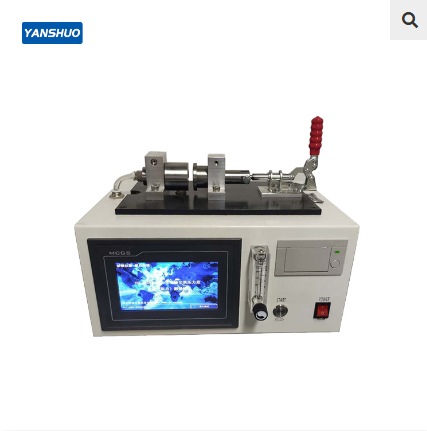
【Scope of application】
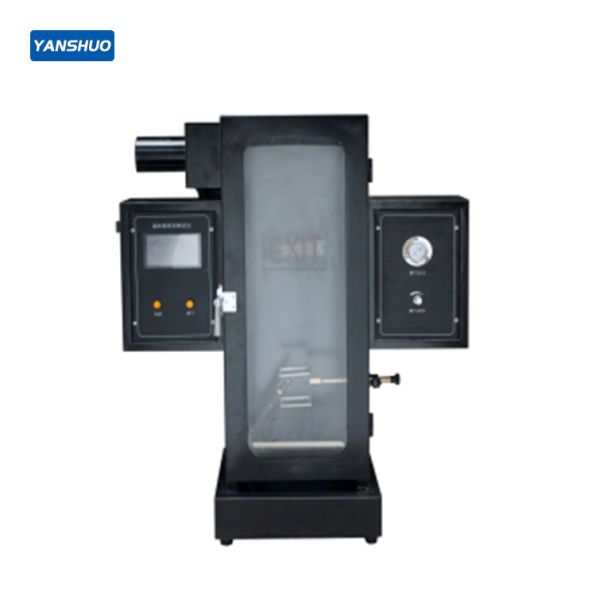
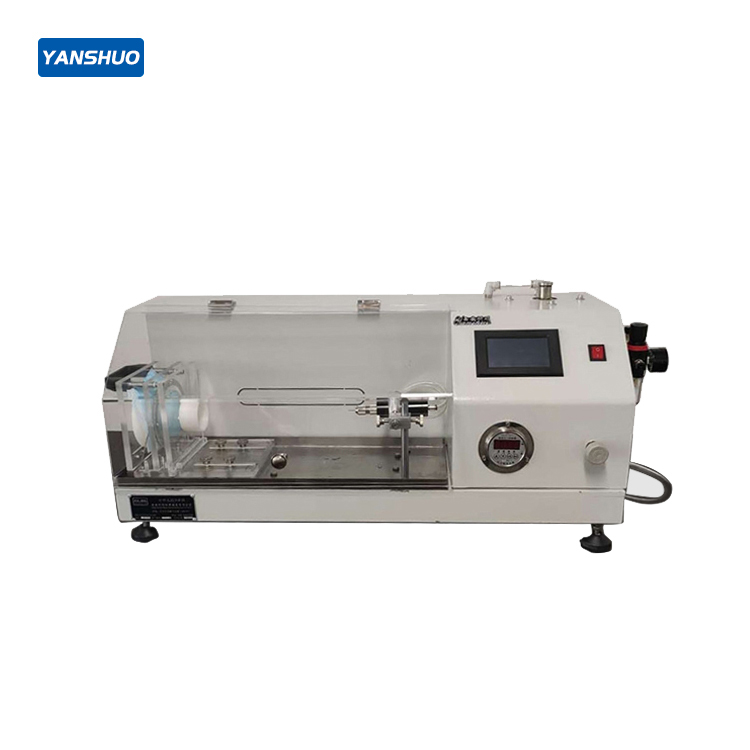
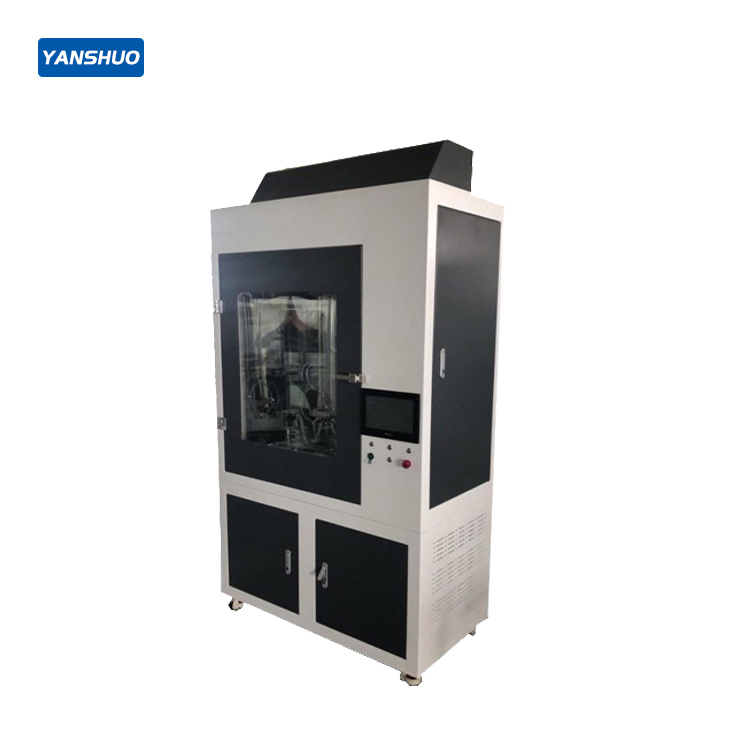
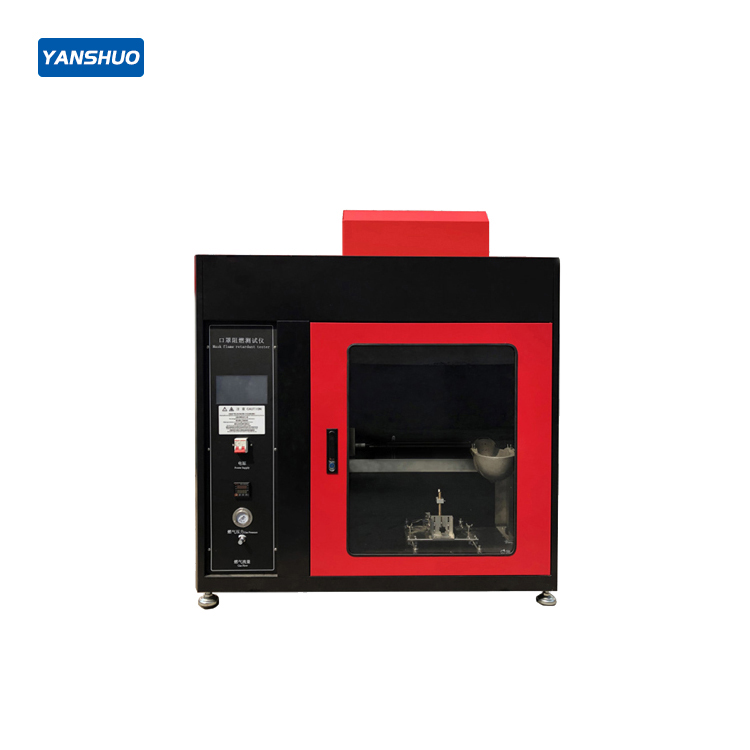
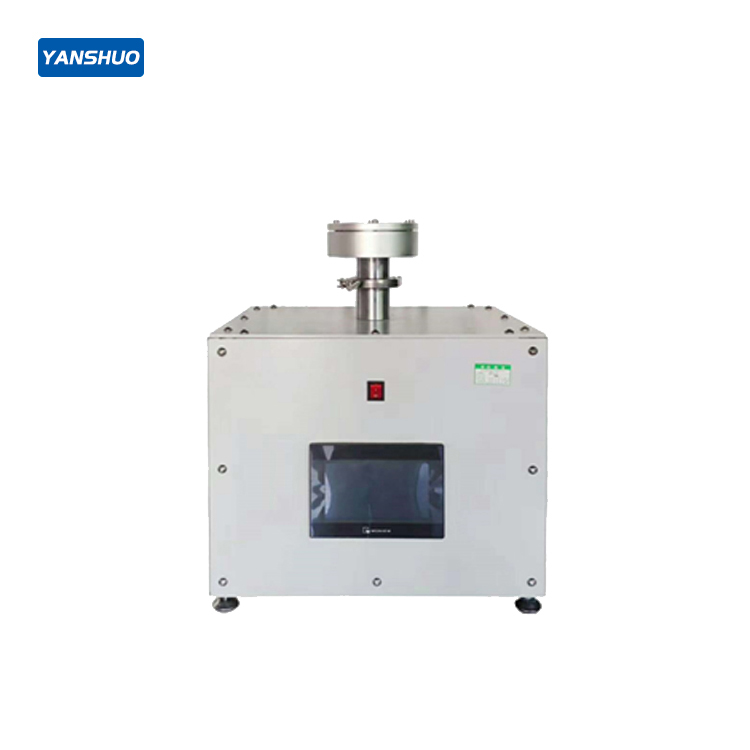
YS-3 building materials smoke density tester is developed according to the technical conditions stipulated in the national standard GB/T8627-2007 “Smoke Density Test Method for Combustion or Decomposition of Building Materials”.
【Relevant Standards】
GB/T8627-2007 “Test Method for Smoke Density of Combustion or Decomposition of Building Materials”
[Meet the standard]:
YS-3 building materials smoke density tester is developed according to the technical conditions stipulated in the national standard GB/T8627-2007 “Smoke Density Test Method for Combustion or Decomposition of Building Materials”.
[Instrument features]:
Compared with the original instrument that uses microcontroller technology to realize the test function, this product has the following characteristics:
1. Dual control mode, can be controlled on the touch screen, or controlled on the computer, the operation mode can be switched arbitrarily! One device can be operated by several computers at the same time, and several computers can be online at the same time, which can realize LAN sharing
2. The main and auxiliary burners can rotate automatically and positioning accurately.
3. Each device is equipped with three standard filters, which are representative of the data proofread by the light source.
4. The instrument has a reasonable structure design, easy operation and maintenance, and is suitable for the determination of static smoke production of building materials, its products, and solid materials.
【Technical Parameters】:
1. For the maximum smoke density (MSD) and smoke density grade (SDR) of the specimen: 0-100% continuous measurable, automatically calculated;
2. The correction error with standard light detection sheet is not more than 3%; Each device is equipped with three standard filters, which are representative of the data proofread by the light source.
3. Bunsen lamp working pressure (210±5) KPa ;
4. Apply flame to the specimen with a Bunsen lamp for 4 minutes;
5. Burning lamp: is a Bunsen lamp, with a length of 260mm, a nozzle diameter of 0.13mm, and a 45° angle with the smoke box;
6. Photoelectric system: the light source is a light bulb, the power is 15W, the working voltage is 6V;
7. Exhaust system: This machine is equipped with a powerful exhaust fan, which can discharge the exhaust gas outdoors after the test;
8. Smoke density measurement range: 0 ~ 100%;
9. Smoke density measurement accuracy: ±3%;
10. Receiver: silicon photocell, 0% light transmittance is no light passing, light transmittance 100% light is completely unobstructed;
11. Main burner working pressure: 276KPa (adjustable);
12. Automatic timing, automatic ignition, automatic smoke exhaust; The optical flux can be calibrated in stages and the test data is more accurate.
13. Touch Display:
a. Size: 5 inches Effective display size Length 11cm Width 6.28cm;
b. Resolution: 800*480
c. Communication interface RS232, 3.3V CMOS or TTL, serial port mode
d. Storage capacity: 1G
e. Pure hardware FPGA driver display, “zero” startup time, can be run when powered on
f. Adopting M3+FPGA architecture, M3 is responsible for instruction parsing, FPGA focuses on TFT display, and the speed and reliability are ahead of similar solutions
g. The main controller adopts a low-energy processor and automatically enters the energy-saving mode
14. L*W*H 740*500*H 900(mm)
【Working conditions of the instrument】:
3.1 Ambient temperature: 0°C-40°C;
3.2 Relative humidity: ≤85%;
3.3 Power supply voltage and power: 220V±10%, 50HZ, 100W;
3.4 Combustible gas: propane with a purity of not less than 85% or gas of equivalent purity (prepared by the customer);
3.5 Gas pressure: 0-0.3MPa (adjustable);
3.6 Environment and test requirements: When the instrument is working, avoid direct exposure or reflection of strong light to the instrument; After 90 minutes of testing, the gas source should be turned off to cool the instrument for 15 minutes.
3.7 Ambient airflow: there is no forced air flow phenomenon in working state;
3.8 The instrument should be placed in the fume hood for testing;